
The single largest source of electricity in Europe
Today, nuclear is one of Europe’s most strategic assets. It provides around one quarter of the EU’s electricity, delivering firm and dispatchable energy that stabilises the grid and supports the integration of variable renewables.
Nuclear is a cornerstone of Europe’s clean, reliable and sovereign energy system. With around 100 reactors delivering roughly 100 GW of installed capacity, the sector currently generates over 30% of the EU’s low-carbon power, making it the largest source of decarbonised electricity.
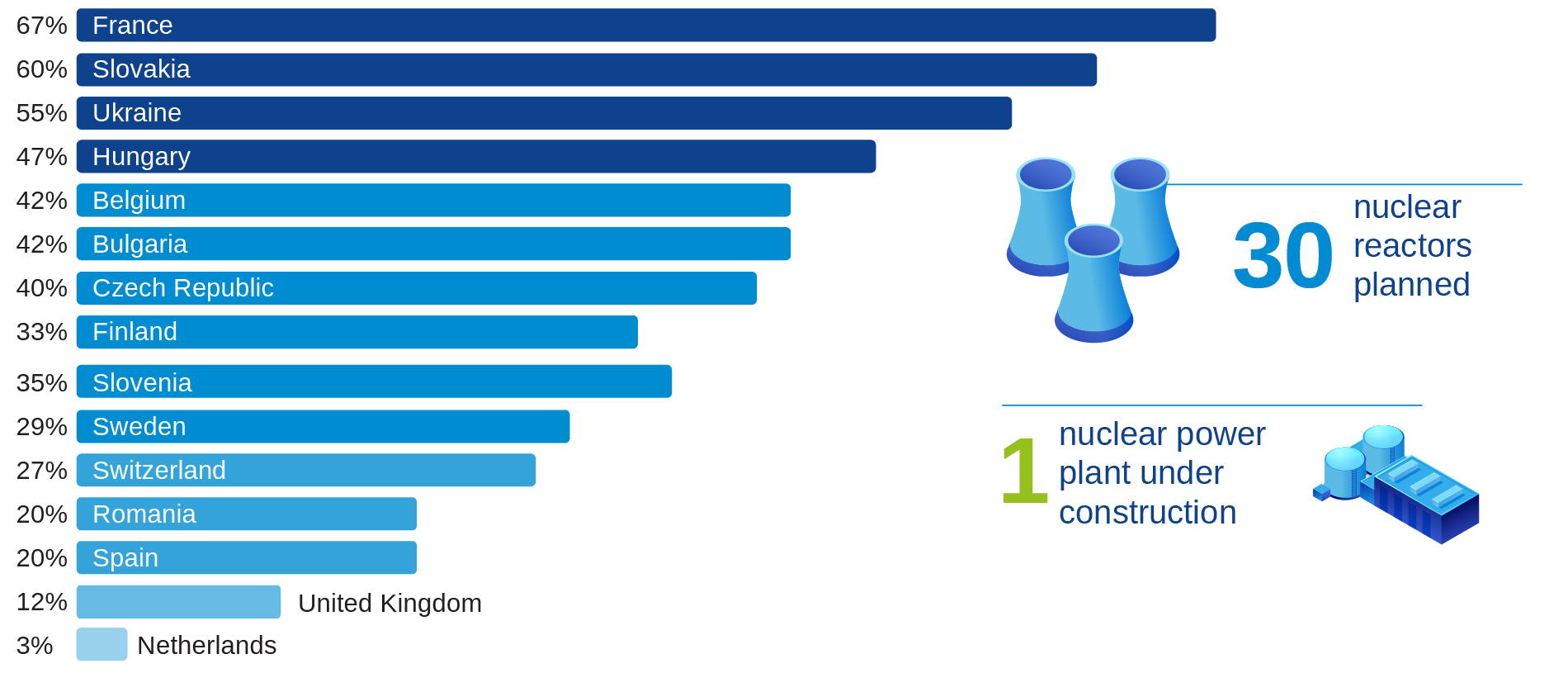
Electricity generation by technology (% in 2024)
Nuclear produces close to a quarter of electricity in the European Union
Even countries that do not operate nuclear power plants directly benefit from nuclear because Europe’s electricity system is highly interconnected.
Power flows across borders through an integrated grid, meaning that clean and reliable nuclear produced in one country supports the stability and affordability of supply in neighbouring countries.
A strategic European value chain
Nuclear is one of the few strategic net zero value chains that is almost entirely based in Europe. The European nuclear supply chain spans the entire lifecycle. Not only does this reinforce our industrial sovereignty and reduce our dependence on external suppliers, it also ensures that innovation, economic value and high-quality employment remain in Europe, strengthening its strategic autonomy.
Europe’s nuclear industry is a recognised world leader, built on decades of technological excellence, innovative prowess and a uniquely comprehensive value chain. From fuel cycle services and reactor components to advanced materials, digital systems and engineering expertise, European companies offer capabilities matched by few global competitors.
Its strength lies in a complete, highly integrated value chain that extends far beyond the countries that operate nuclear reactors. Thousands of companies across all Member States supply equipment, materials, digital technologies and specialist services, making nuclear one of Europe’s broadest and most interconnected industrial systems. This ecosystem reaches far beyond energy generation, as it also includes vital medical diagnosis and treatment, as well as space and agricultural applications.
Bringing prosperity to Europe’s economy
The nuclear sector’s economic contribution is equally substantial. The sector supports around 900,000 jobs across engineering, manufacturing, construction, operation, research and innovation, and generates billions in economic value each year.
The nuclear sector plays a vital role in Europe’s social fabric by sustaining high-quality employment across a wide range of communities, including many rural and industrial regions where alternative opportunities are limited. It supports jobs, spanning not only engineers but also a large share of vocational and technical profiles.
The nuclear sector in Europe
Is responsible for over
in EU economic output
Generates nearly
in public revenues
Powers
in disposable household income
Supports around
jobs covering a broad range of skills sets, from construction to nuclear engineers